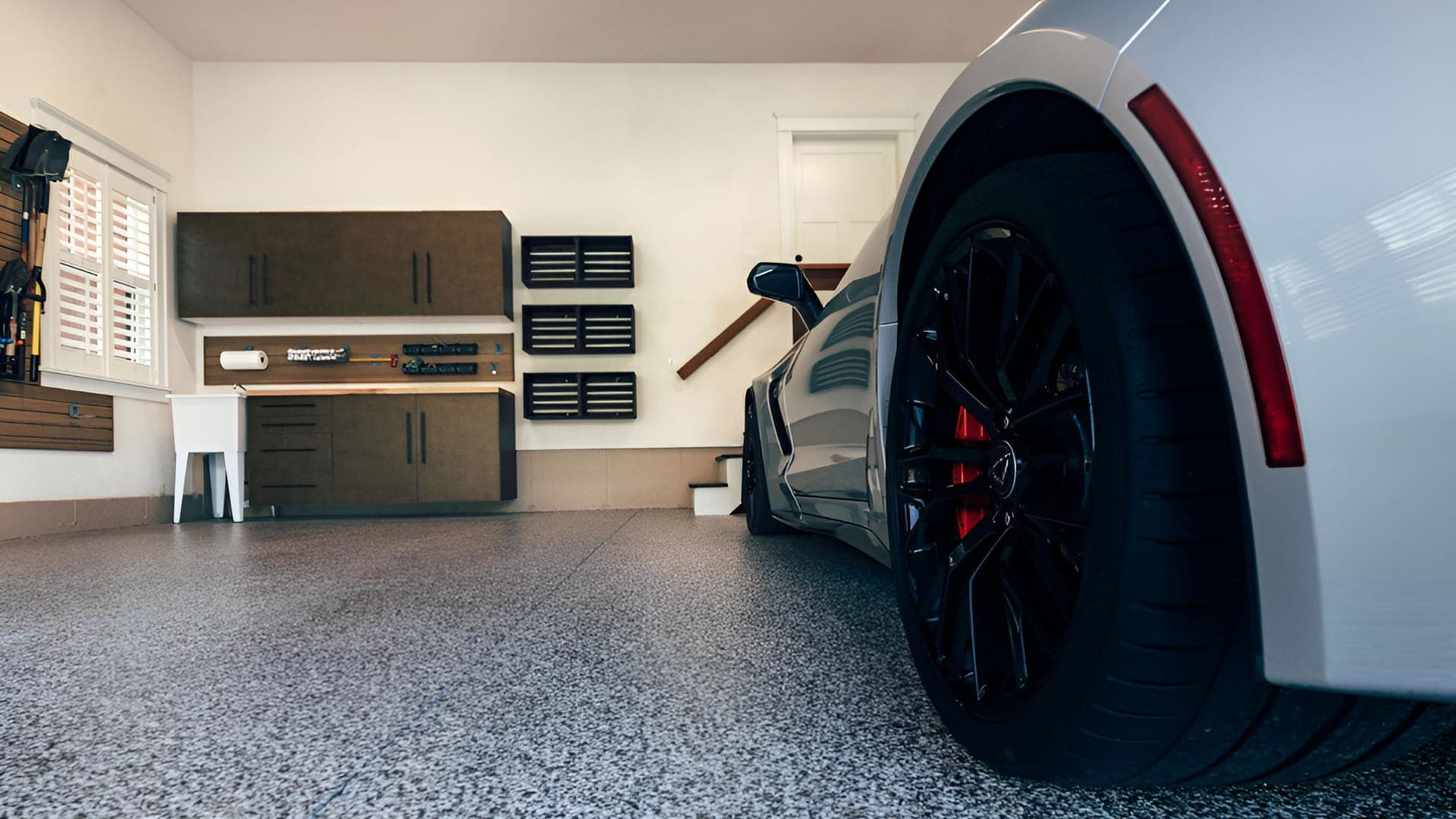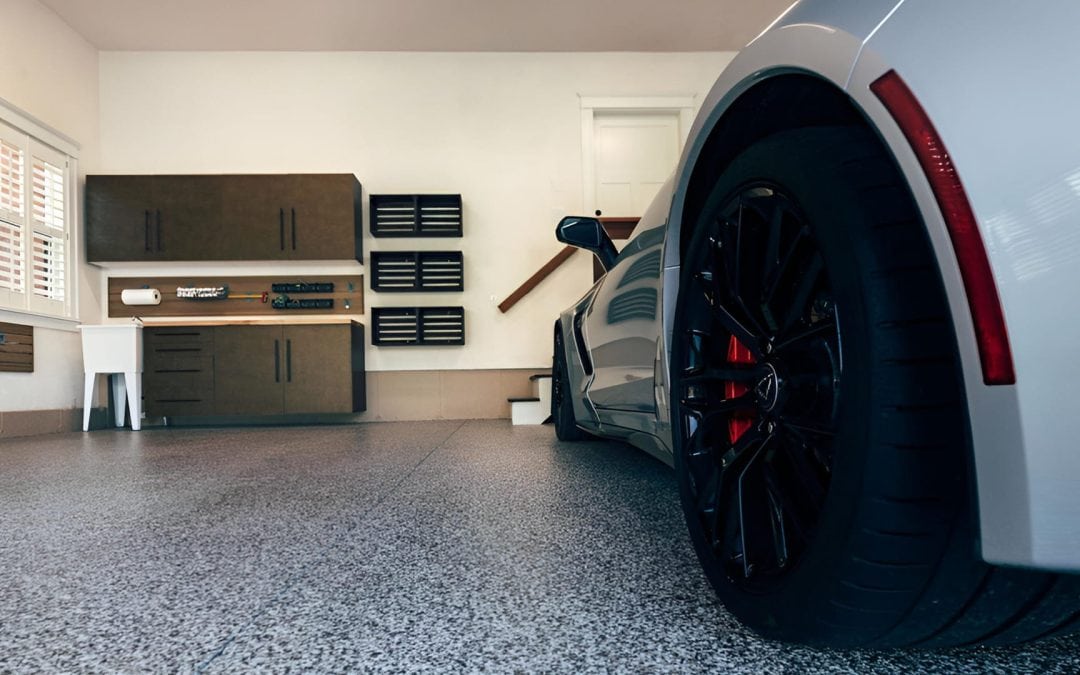
Garage floors deal with vehicle weight, tire debris, oil drips, tools, storage equipment, moisture, and constant foot traffic, so bare concrete can begin looking worn fairly quickly. The benefits of epoxy flooring for garage floors include added surface protection, simpler cleaning, decorative choices, and a finished surface that can handle demanding household use. Homeowners should also consider installation cost, concrete condition, moisture, lifespan, and preparation before choosing a coating. “Every system is custom-built based on how you use the space and the condition of your concrete,” a representative of Optima Concrete Coatings said in company guidance.
- Garage use should guide coating selection.
- Concrete condition matters before installation.
- Preparation affects adhesion and long-term performance.
1. Epoxy Garage Floor Benefits
Epoxy garage flooring creates a hard cured surface over properly prepared concrete, giving homeowners another layer between the slab and everyday wear. A common example is an older garage where tire paths, small stains, and surface wear become increasingly visible even though the concrete remains structurally sound. “Before coating, we make sure your surface is clean, level, and ready for a long-lasting bond,” a representative of Optima Concrete Coatings said in company guidance. That preparation becomes especially meaningful when durability is the homeowner’s main concern.
- Cured coatings create a hard surface over concrete.
- Preparation helps the coating bond correctly.
- Vehicle and workshop use can influence system choice.
2. Stronger Surface Protection
Concrete may look solid, yet its exposed surface still takes abrasion from tires, rolling cabinets, lawn equipment, tools, and tracked-in grit. Epoxy flooring creates a continuous coating that takes much of this routine wear before it reaches the concrete underneath. Technical data for professional epoxy floor coatings documents strong adhesion to concrete and products formulated for demanding floor applications. Homeowners still need to repair major cracks or structural problems rather than expecting a coating to hide them.
- Coatings separate concrete from routine surface wear.
- Rolling equipment can be less damaging to a protected slab.
- Existing concrete damage may require repair first.
3. Easier Garage Cleaning
Cleaning bare concrete can become frustrating because its porous, textured surface catches dirt, dust, fluids, and fine debris. Epoxy flooring creates a smoother finished surface that can usually be swept, vacuumed, or mopped without the same amount of scrubbing, and spilled material is easier to see before it spreads. Angi’s garage floor guidance recommends regular cleaning because accumulated debris can scratch coated flooring over time. Quick cleanup still matters, especially after automotive fluids or chemicals spill.
- Smooth surfaces are easier to sweep.
- Spills become easier to spot.
- Routine cleaning helps limit abrasive debris.
4. Cleaner Garage Appearance
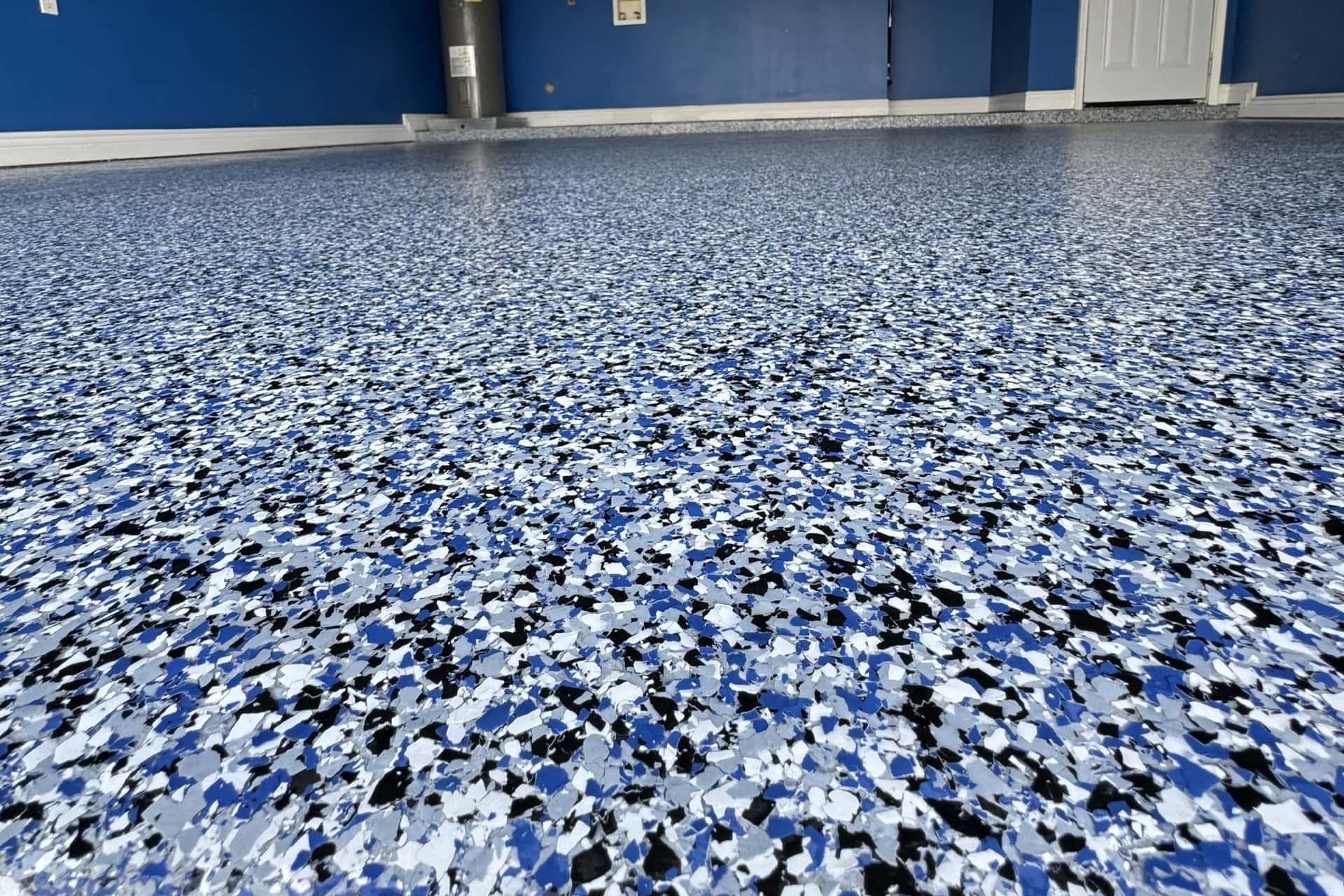
Garage flooring no longer has to look like unfinished gray concrete simply because cars are parked on it. Decorative flakes, solid colors, gloss choices, and textured finishes allow homeowners to match the floor with cabinets, walls, workbenches, or other parts of the garage. Optima Concrete Coatings lists flake, quartz, metallic, and other decorative systems among its available concrete finishes. Flake patterns can also make light dust and minor everyday marks less noticeable between cleanings.
- Color choices can coordinate with garage interiors.
- Decorative flakes add visual texture.
- Finish options range from understated to more decorative.
5. Better Stain Resistance
Motor oil, grease, muddy water, lawn chemicals, and other substances can soak into uncoated concrete and leave difficult stains. A properly cured epoxy system provides a less porous barrier, giving homeowners more time to remove many common spills before they reach the slab. Product testing for professional epoxy flooring systems documents resistance to numerous chemicals, though resistance varies by coating formula and substance. Homeowners should still wipe spills promptly rather than treating any coating as chemically indestructible.
- Oil is less likely to soak directly into coated concrete.
- Chemical resistance varies among epoxy systems.
- Fast spill cleanup can protect the finish.
6. Garage Floor Suitability
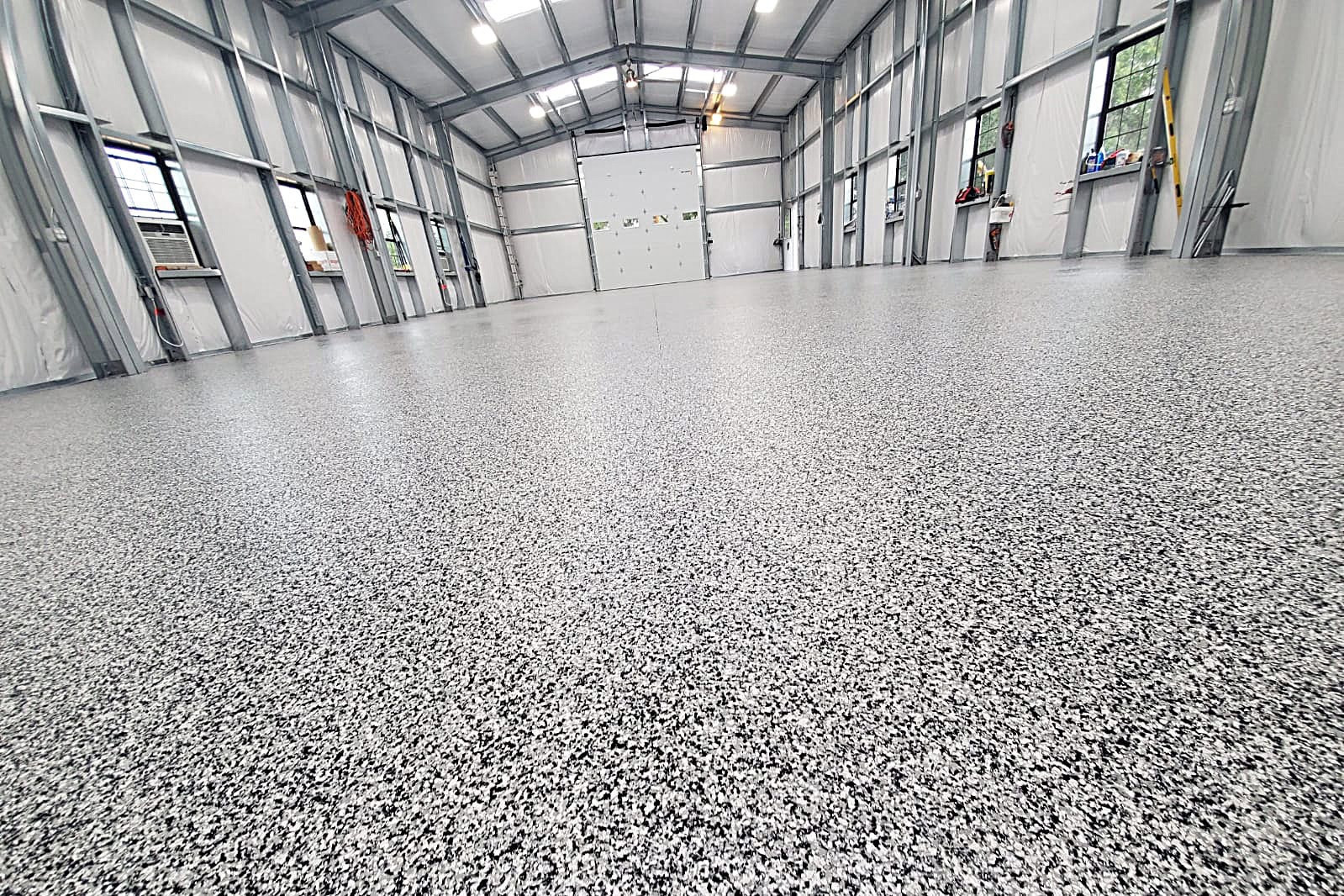
Epoxy flooring is suitable for many garage floors, but the concrete underneath determines whether installation can proceed normally. Installers may need to check for moisture, cracks, previous coatings, contamination, spalling, or other conditions that interfere with adhesion, and a damp slab can require a different preparation strategy. Sika’s concrete moisture guidance recommends moisture testing and proper substrate evaluation before resinous flooring is installed. A garage floor should be treated as an individual slab rather than assuming every concrete surface needs the same coating system.
- Moisture testing may be needed before coating.
- Cracks and damaged areas may require repair.
- Old paint or coatings can change preparation needs.
7. Epoxy Flooring Cost
Epoxy flooring cost varies because square footage is only one piece of the estimate. Current 2026 data from Angi’s epoxy flooring cost guide places professional installation at roughly $2 to $12 per square foot, including materials and labor, while floor size, resin type, repairs, and surface preparation can shift the total. A two-car garage that needs extensive grinding, crack repairs, coating removal, or a decorative finish can cost more than a similarly sized slab in clean condition. Price makes more sense when homeowners compare preparation, coating system, expected service life, and maintenance rather than square-foot rates alone.
- Professional installation may run about $2 to $12 per square foot.
- Repairs and preparation can increase project cost.
- Decorative systems may cost more than basic finishes.
8. Epoxy Floor Lifespan
Epoxy floor lifespan depends heavily on the product, preparation, traffic, maintenance, moisture, and amount of sunlight the surface receives. Angi reports that epoxy flooring can last roughly 10 to 20 years depending on the material and frequency of use, while thinner or less durable systems may need attention sooner. A heavily used workshop, for example, places different demands on flooring than a garage used mainly for parking one vehicle. Peeling, deep scratching, loss of adhesion, or widespread surface wear can signal that repair or recoating should be evaluated.
- Some properly installed systems can last 10 to 20 years.
- Heavy use may shorten coating life.
- Cleaning and maintenance help control premature wear.
9. Less Concrete Dust
Bare concrete can release dust when its surface is cut, ground, abraded, or gradually worn, which is one reason professional preparation requires proper dust control. NIOSH research on concrete grinding found that local exhaust systems attached to grinders reduced worker dust exposure by at least 90% during studied grinding operations. Once preparation is finished and the coating has cured, the concrete surface is covered rather than left directly exposed to garage activity. That sealed finish can also make workshops, storage areas, and hobby spaces easier to keep tidy.
- Mechanical concrete preparation can generate substantial dust.
- Professional dust extraction is valuable during grinding.
- A finished coating covers the exposed concrete surface.
10. Long Term Garage Value
Garage flooring earns its practical value when several smaller advantages work together, including protection, easier cleaning, stain resistance, appearance, and a potentially long service life. Homeowners who frequently park vehicles, work on projects, store equipment, or use the garage as an extension of the house may notice those differences more often than someone who rarely enters the space. Safety deserves attention during installation because the CDC and NIOSH explain that uncured epoxy components may present exposure hazards, while cured epoxy and resin products are generally safer to handle. Professional preparation, ventilation, product selection, curing, and maintenance all influence the value received from the finished floor.
- Daily garage use influences the value of a coating.
- Uncured epoxy requires appropriate safety precautions.
- Correct curing is part of a successful installation.
Choosing Garage Epoxy
Epoxy flooring for garage floors makes the most sense when homeowners look beyond appearance and consider how the entire system works with the concrete underneath. Cost can range widely, lifespan can stretch for many years, and durability depends heavily on preparation, moisture conditions, coating chemistry, traffic, and maintenance, so the cheapest installation is not automatically the least expensive over time. Homeowners should also remember that a glossy floor is only the visible portion of the job because grinding, repairs, moisture evaluation, base coatings, texture, and curing can determine whether that finish remains attached. A thoughtful comparison of slab condition, garage use, safety, maintenance, and expected service life gives homeowners a much clearer picture of whether epoxy is suitable for their floor.
- Judge the coating system and preparation together.
- Compare installation cost with expected lifespan.
- Match the finish to actual garage use.
Epoxy Garage Floor Takeaways
- Epoxy can shield concrete from everyday abrasion, stains, and garage traffic.
- Professional epoxy installation commonly costs about $2 to $12 per square foot based on current national estimates.
- Properly installed epoxy flooring may last 10 to 20 years under suitable conditions.
- Concrete moisture, cracks, contamination, and previous coatings should be evaluated before installation.
- Mechanical preparation can play a major role in coating adhesion.
- Decorative flakes, colors, and texture give homeowners several appearance choices.
FAQs
Is Epoxy Flooring Suitable for Garages?
Epoxy is suitable for many sound concrete garage floors when moisture, contamination, cracks, and previous coatings are addressed first. Certain slabs may require repairs or moisture-control products before the main coating system is applied. An evaluation helps determine whether epoxy or another concrete coating system fits the conditions better.
How Long Epoxy Flooring Lasts?
A professionally installed epoxy floor may last roughly 10 to 20 years, though no single lifespan applies to every garage. Vehicle traffic, sunlight, moisture, abrasive dirt, coating thickness, and maintenance can change that timeline. Correct preparation at the beginning can have an outsized effect on how the coating ages.
What Does Epoxy Flooring Cost?
Professional epoxy flooring commonly falls between about $2 and $12 per square foot according to current national cost data. Garage size, slab repairs, grinding, old coating removal, resin type, decorative flakes, and labor can move the price higher or lower. Homeowners comparing estimates should check exactly what preparation and coating layers are included.
Why Does Epoxy Peel?
Epoxy may peel when the coating fails to bond properly with the concrete beneath it. Moisture, oil contamination, inadequate preparation, an incompatible existing coating, or application mistakes can contribute to adhesion problems. Finding the cause matters because simply covering a failing area may allow the problem to return.
Can Epoxy Flooring Handle Cars?
Garage epoxy systems are commonly selected for areas that receive residential vehicle traffic. Coating type, preparation, curing, tire conditions, and surface maintenance influence how well a particular floor handles repeated parking. Homeowners should wait until the manufacturer’s required curing period has passed before placing vehicles on a newly coated floor.

Piper Burch is a distinguished author and journalist, renowned for her insightful coverage of local business news and enterprises. With a keen eye for uncovering the stories that shape communities, Piper brings a wealth of experience and a deep understanding of the economic landscape to her writing. Her work is characterized by a commitment to highlighting the successes, challenges, and innovations of local businesses, providing readers with a comprehensive view of their community’s economic health and potential.